Verdict: Choose the Sofa That Fits Your Room and Routine
There is no single best sofa for every UK home. The strongest choice is the one that fits the room, supports the way your household actually relaxes and socialises, and remains manageable to care for over time.
Start with the non-negotiables: the available footprint, the route into the property, how many people need to sit comfortably, and whether the sofa is for daily lounging, formal hosting or both. Then compare comfort, upholstery, construction information, delivery conditions and the overall cost of ownership.
Editorial recommendations can be a helpful starting point, and retailer warranties may add reassurance, but neither replaces checking the current product specification, availability and terms before you order.
What Makes a Sofa Right for a UK Home
A sofa is usually the visual and practical centre of a living room, so sofa type alone is not enough to determine whether it will work in your home. A compact two-seater may be ideal in a smaller sitting room, while a larger household may value the extra seating or zoning potential of a corner, chaise or modular design.
Use six questions to keep the comparison grounded:
- Does the footprint suit the room without making circulation awkward?
- How many people need to use it at the same time?
- Do you prefer an upright, supportive sit or a deeper, more relaxed feel?
- Will the fabric, colour and finish cope with children, pets, guests or everyday meals?
- Does the silhouette work with the room’s style and layout?
- Does the delivered price still represent good value once care, delivery and warranty terms are considered?
Independent sofa guides consistently frame the best choice as personal to the room, needs and preferred look, while retailer category guidance similarly highlights size, material, colour, shape and design as connected decisions. Treat a shortlist as a way to make those trade-offs visible, rather than as a universal league table.
Top Sofa Formats and Where They Work Best
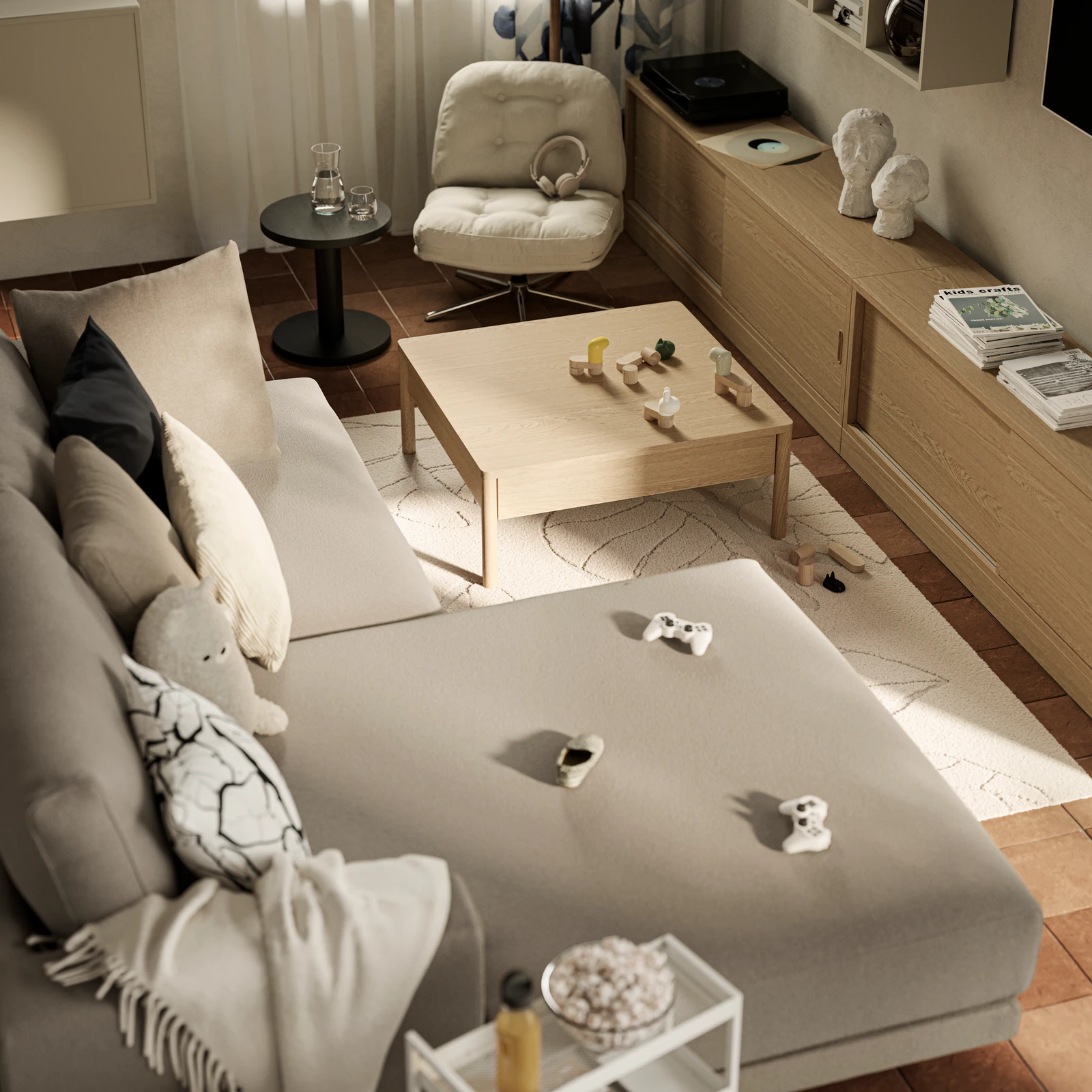 The most useful sofa format is the one that solves your seating and layout problem with the least compromise.
Compact two-seaters suit smaller living rooms, flats and homes where a sofa shares space with a dining table, desk or storage. They can also work well as part of a pair in a more formal room. Their main advantage is a smaller footprint; their trade-off is limited room for several people to lounge at once.
Three-seaters are a versatile middle ground for many living rooms. They give more everyday seating than a two-seater without automatically committing the room to the presence of a large corner arrangement. Check depth as well as width: a visually modest sofa can still project far into a narrow room.
Chaise sofas offer a place to stretch out without requiring a full corner layout. They can be particularly appealing where one or two people regularly lounge, but the chaise projection must be planned around walking routes, doors and other furniture.
Corner sofas can create generous shared seating and help define a living zone in an open-plan space. They are not automatically the best family option, though. In a compact room, a large corner can dominate the layout, block access or leave too little flexibility for rearranging.
Modular sofas are worth considering where the room, household or seating needs may change. Their flexibility can make them useful for larger spaces and evolving layouts, but confirm the dimensions of the complete configuration rather than assessing each module in isolation.
IKEA’s UK sofa category lists two-seater, three-seater, chaise, corner and modular sofas, which makes this a practical format-based starting point. The final choice should still be made against your own plan, measurements and routine.
The Qualities Worth Paying For
The best long-term value often comes from suitability rather than from buying the largest sofa or the most eye-catching fabric. Prioritise dimensions that allow the room to function, a comfort level you genuinely enjoy, and upholstery that matches the demands of daily life.
Comfort deserves more attention than showroom appearance. If you can try a sofa in person, sit in the way you normally would at home: upright, leaning back and, where relevant, with more than one person seated. Consider seat depth, back support and whether the arms and cushion feel suit your usual use. If you are buying online, read the current dimensions and product information carefully, then use the returns and delivery terms as part of the decision.
For upholstery, think about maintenance before colour. A finish that looks right in a quiet showroom may be less suitable for a busy household if it needs more careful cleaning than you are prepared to give it.
A listed warranty can be useful context, especially where a retailer describes tested quality or long-term coverage. It is not proof that every sofa will meet every household’s needs. Read the current terms, duration and exclusions for the specific product before treating warranty coverage as part of its value.
Limitations and Buying Pitfalls to Check First
The most expensive sofa mistake is often a fit mistake. A sofa can look perfect online and still be too large for the room, too deep for the layout or difficult to bring through the entrance. Measure the intended position and the access route before committing, including any tight turns, stairs and doorways that affect delivery.
Avoid selecting only by style. A dramatic corner profile, curved shape or pale upholstery may suit an image-led scheme, but it should still leave room for everyday movement and match how the household uses the space.
Also be wary of treating broad labels as complete information. “Comfortable”, “easy clean”, “tested quality” and “long warranty” are useful prompts for further checking, not substitutes for the current product details. Compare the actual dimensions, upholstery guidance, delivery conditions, stock status and warranty exclusions.
Finally, do not assume more seating is always better. An oversized sofa can make a room feel less useful, while a smaller or more flexible format may create a more comfortable everyday layout.
Alternatives for Specialist Needs
A conventional upholstered sofa is not the right answer for every brief. If occasional guests need a proper sleep surface, begin with a sofa bed guide and assess the bed mechanism, mattress arrangement and room needed when it is opened.
If storage is the priority, look at storage seating or purpose-built furniture rather than assuming a standard sofa will solve clutter. For a particular finish, such as leather, compare care demands and the room’s overall look alongside comfort and fit.
Traditional profiles, curved designs and fast-delivery options can also be sensible routes when they answer a clear requirement. The point is not to treat these as lower-ranked substitutes, but to choose the specialist format when it solves the problem you actually have.
How to Narrow Your Sofa Shortlist
AI-generated generic editorial illustration — not a retailer product photo and does not depict the reviewed product or service. Make the final shortlist workflow practical by visualising the measurements and access checks that prevent costly fit mistakes.
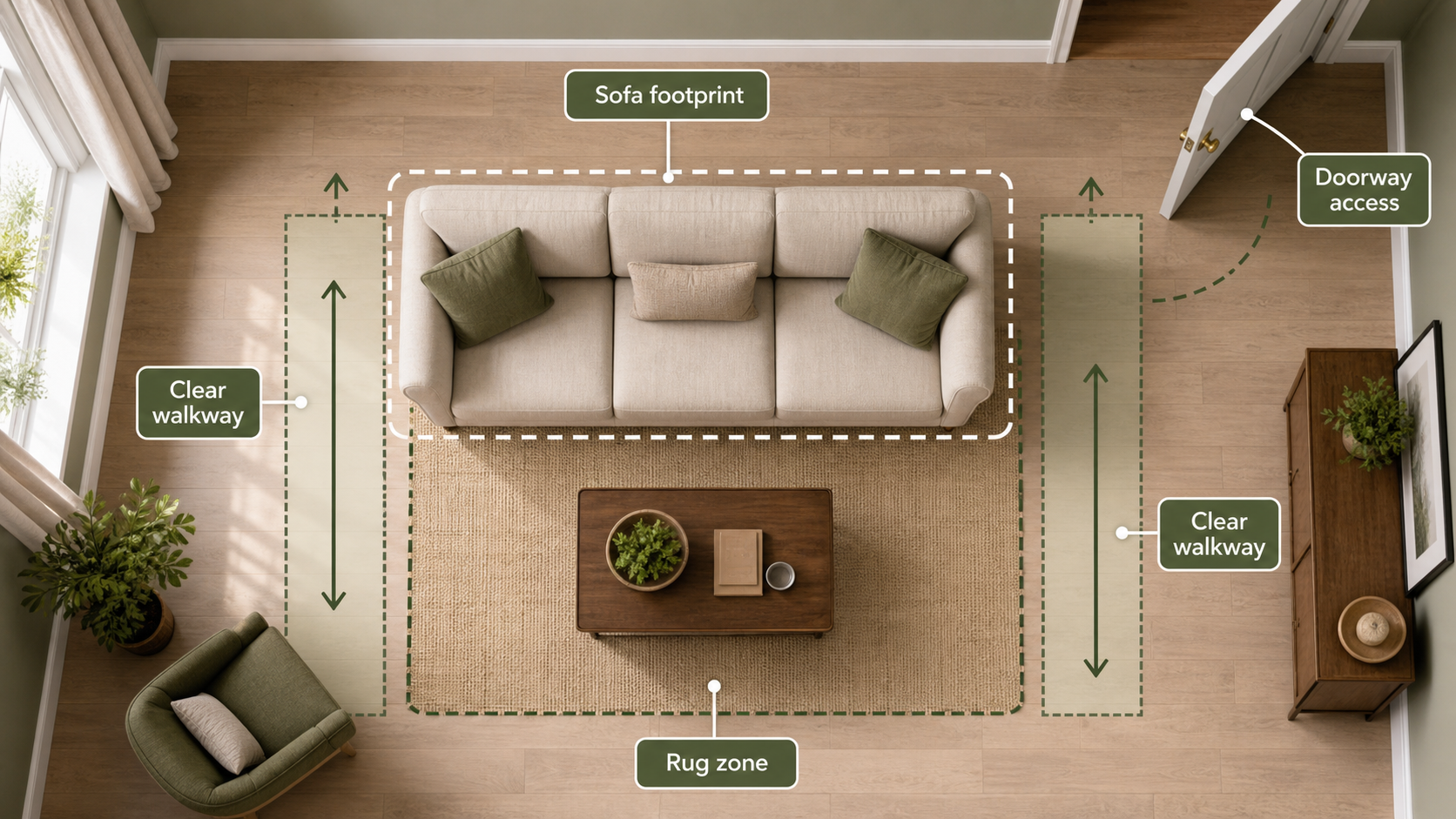 Use a simple sequence to turn a broad search into a confident shortlist.
- Measure the room and access route. Record the available sofa footprint, surrounding circulation space, doorways, stairs and tight turns. Keep the measurements with you while browsing.
- Define the primary use. Decide whether the sofa is mainly for family lounging, entertaining, reading, occasional guests or shaping an open-plan living area.
- Choose the format. Match that use to a compact two-seater, three-seater, chaise, corner or modular configuration. Eliminate formats that cannot work within the available footprint.
- Compare comfort and construction information. Try shortlisted sofas where possible. Where that is not possible, compare the current product dimensions, stated materials and support details without assuming that marketing language will feel the same for everyone.
- Check care and delivered value. Compare upholstery guidance, delivery arrangements, stock, return conditions and the warranty terms for the exact model.
- Make a final reality check. Ask whether the sofa will still work when the room is in normal use, not just when it is newly arranged for a photograph.
This approach helps you avoid a false “best overall” verdict. The winning option is the one that survives the measurement, comfort, care and delivery checks together.
Frequently Asked Questions
How should I measure a room and doorway before buying a sofa?
Measure the proposed sofa position, then check the route from the delivery entrance to that room. Include doorways, halls, staircases, landings and tight turns. Compare these figures with the current product dimensions and confirm delivery conditions with the retailer before ordering.
Is a corner sofa always the best choice for a family living room?
No. A corner sofa can provide generous shared seating, but it may be too dominant in a smaller room or too restrictive if the layout needs to change. A three-seater, chaise or modular arrangement can be a better fit depending on the room and how the family uses it.
What should I check when comparing sofa warranties?
Check the warranty length, what the specific warranty covers, any exclusions and whether conditions apply to care or use. A retailer’s warranty is useful information, but it should be assessed alongside the product specification, delivery terms and your own expected use.
How can I judge whether a sofa will be comfortable without relying on marketing claims?
Try the sofa in person if possible, using the sitting positions you use at home. If you are shopping online, compare dimensions and product information, read independent editorial guidance for context, and make sure you understand the retailer’s current delivery and returns conditions before you commit.
Sources
Related reading
- IKEA vs John Lewis sofas: which is the better fit
- IKEA sofas review: strengths, limits, and alternatives
- How to choose a sofa for your room and daily life
- How a sofa should fit, feel, and perform in a real home
Editorial information: About our editorial team · Read our editorial policy · Read our affiliate disclosure.