IKEA Sofas Review: Our Verdict
IKEA is a sensible first stop if you want to compare several sofa formats without treating your budget as an afterthought. Its UK range includes conventional sofas, sofa beds and numerous named series, so it can work particularly well for renters, first-home buyers and households trying to make an awkward room do more than one job.
The caveat is that “IKEA sofa” is not one product proposition. A compact fixed two-seater, a configurable VIMLE arrangement and a sofa bed should be judged on their own dimensions, seating feel, fabric and intended use. The best value is therefore usually found by starting with your room and routine, then narrowing the range—not by assuming the cheapest or most familiar series will suit everyone.
For shoppers who need adaptable layouts, accessible price points and the option to plan a modular configuration, IKEA deserves a place on the shortlist. For buyers prioritising a very particular sit, a more upholstery-led finish, or a long-term comfort benchmark, it is worth comparing the exact model with specialist and design-led alternatives before committing.
What the IKEA Sofa Range Includes
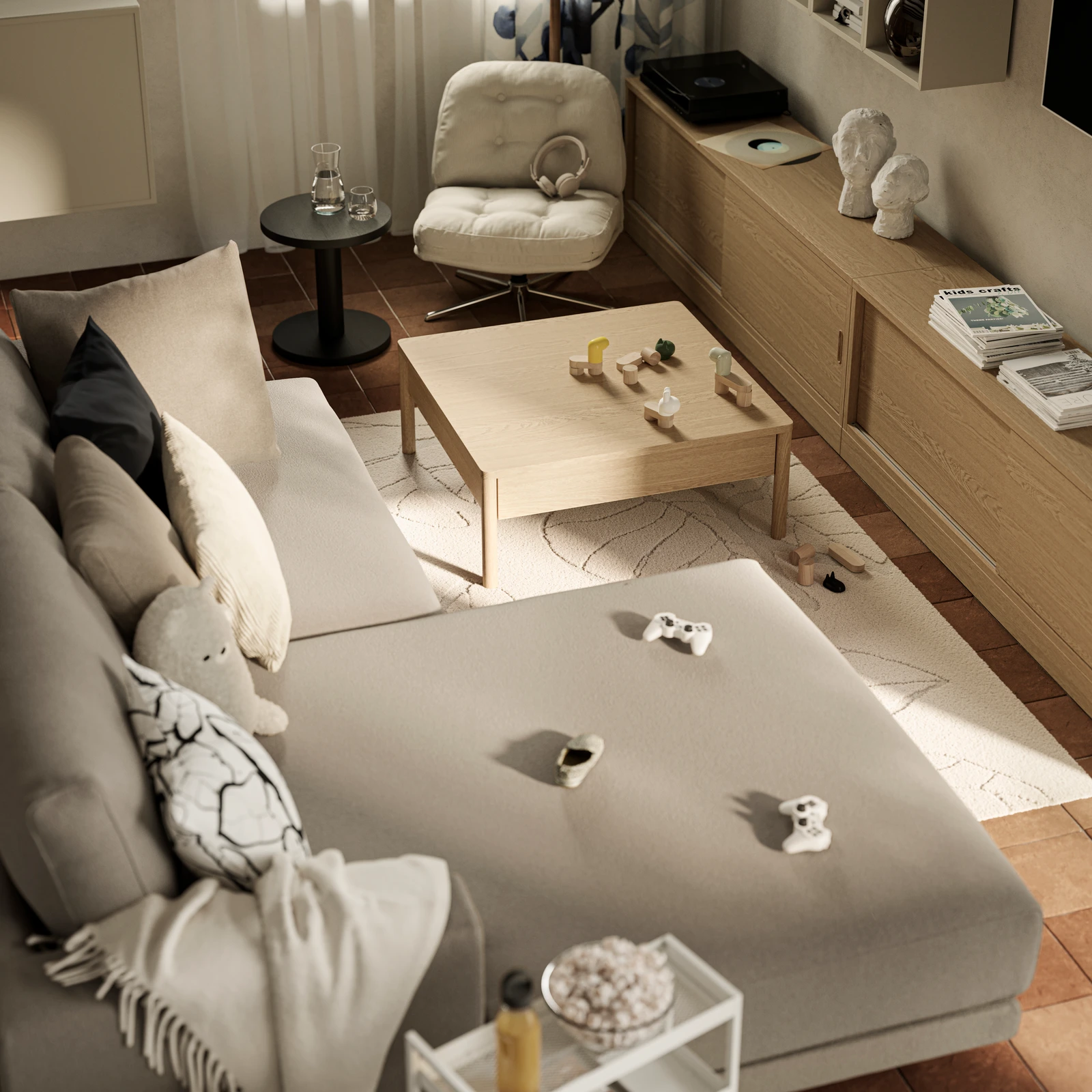 IKEA’s UK sofa hub is broad enough to cover more than the standard two- or three-seat purchase. Alongside sofas, it lists sofa beds and a large set of series, including VIMLE, LANDSKRONA, KIVIK, EKTORP, SÖDERHAMN and JÄTTEBO. That gives shoppers several routes into the range: a straightforward fixed sofa, a sectional or modular-looking living-room arrangement, or a bed-ready option for a multi-purpose room.
This matters because the formats solve different problems. A small household may be looking for seating that does not dominate the room; a growing family may prefer a configuration that can be planned around a corner; and a guest room may need a sofa bed rather than a conventional sofa. IKEA also offers online planners for modular sofas and sofa beds, reinforcing the fact that configuration is part of the proposition rather than an afterthought.
Start by filtering the range by format and footprint. Once you know whether you need a sofa, sofa bed or more flexible arrangement, comparing individual series becomes much less overwhelming.
IKEA Sofa Strengths
The clearest IKEA advantage is choice with a practical bias. The UK range brings together sofas, sofa beds and many distinct series in one place, which makes it easier to compare room-friendly formats before moving between retailers. That breadth is useful when a living room has competing needs: everyday seating, overnight guests, a corner to fill, or a layout that may change after a move.
Modularity and planning tools are another reason to shortlist it. IKEA explicitly supports planning and personalising modular sofas and sofa beds, so shoppers can consider a configuration in relation to a room instead of buying a generic shape and hoping it works. This is especially relevant in rental homes, open-plan spaces and family rooms, where a chaise, corner or extra section can alter circulation as much as seating capacity.
There is also a clear value-oriented entry point. IKEA promotes delivery offers for Family members, finance options and assembly services alongside the sofa range. Those services do not make every model the best buy, but they can make the overall purchase easier to scope if you are balancing furniture cost, delivery and setup. Check the terms and price for the exact order rather than assuming those options apply in the same way to every purchase.
Finally, the range makes comparison more disciplined. You can place different styles and formats side by side before deciding whether you actually need a large corner sofa, a sofa bed or a simpler compact model. That is a more useful starting point than choosing by a photograph alone.
IKEA Sofa Limitations to Consider
The range’s breadth is also its main warning: the IKEA name does not tell you how a particular sofa will feel to sit on, how its upholstery will suit your household, or whether its proportions will work in your room. Comfort is a core sofa-buying consideration, and independent buying guidance stresses that the role of the sofa, the available space and the type of support you prefer should shape the decision.
Do not assume that a popular series will have the same appeal for every user. A sofa intended for relaxed evening lounging may call for a different seat and back feel from one used for upright entertaining. Likewise, a fabric that looks right for a low-traffic room may need more scrutiny in a home with children, pets or frequent guests. Read the specification for the chosen configuration and, where possible, try the model before ordering.
Delivery and access deserve equal attention. A sofa that fits the living room on paper can still be difficult to get through a stairwell, narrow hall or lift. IKEA advertises delivery, planning and assembly options, but the practical availability, cost and suitability need checking against the exact product and postcode.
Long-term value should be assessed model by model. An accessible purchase price can be attractive, but it is not a substitute for comparing comfort, construction information, fabric suitability, warranty or service terms, and the alternatives available at the same total spend.
Alternatives to IKEA Sofas
If IKEA’s combination of formats and planning flexibility is close but not quite right, compare alternatives by priority rather than by prestige. Independent UK sofa round-ups span budget, luxury, corner, modular, sofa-bed, comfort and small-space categories, which is a useful reminder that no single retailer leads every use case.
For a compact budget sofa or quick delivery, a direct-to-consumer brand may be worth comparing on its exact lead time, packaging, returns and assembly demands. The right comparison is not simply “boxed sofa versus IKEA”; it is whether the size, sit and delivery experience solve your particular constraint.
For a more traditional or upholstery-led look, established upholstery retailers and design-focused brands may offer styles that better suit a formal living room or a specific interior scheme. That can be worthwhile when the sofa is intended to anchor the room visually, but compare the final price, dimensions and seating comfort rather than assuming a higher price automatically means a better fit.
For a modular or corner layout, compare how each retailer handles configuration, room planning and future changes. For a sofa bed, focus on both daytime seating and the likely frequency of overnight use. Independent guides consistently frame sofa choice around purpose, room dimensions and personal priorities; use those criteria to make alternatives genuinely comparable.
Who IKEA Sofas Suit Best
IKEA is likely to suit shoppers who want a broad, practical shortlist before they know the exact format they need. It is a strong fit for renters and first-time buyers working around limited space, changing homes or a modest furnishing budget. The choice of sofas, sofa beds and multiple series makes it easier to begin with the room problem rather than a fixed product type.
It can also suit households looking for a configurable living-room solution. If a corner, chaise-style arrangement or a future layout change is central to the brief, IKEA’s modular planning route is worth investigating carefully.
Look elsewhere, or at least compare more widely, if your decision hinges on a very specific level of cushioning, an especially tailored upholstery look, or a sofa expected to meet a demanding long-term comfort preference. Those are not reasons to rule IKEA out; they are reasons to test and compare the exact model rather than buying at brand level.
Small-space shoppers should prioritise dimensions and access. Regular hosts should assess the sofa-bed mechanism and sleeping use. Style-led buyers should compare the silhouette, upholstery and room presence with retailers that specialise in the look they want.
How to Choose an IKEA Sofa
AI-generated generic editorial illustration — not a retailer product photo and does not depict the reviewed product or service. Help readers translate room and household needs into a safer IKEA sofa choice.
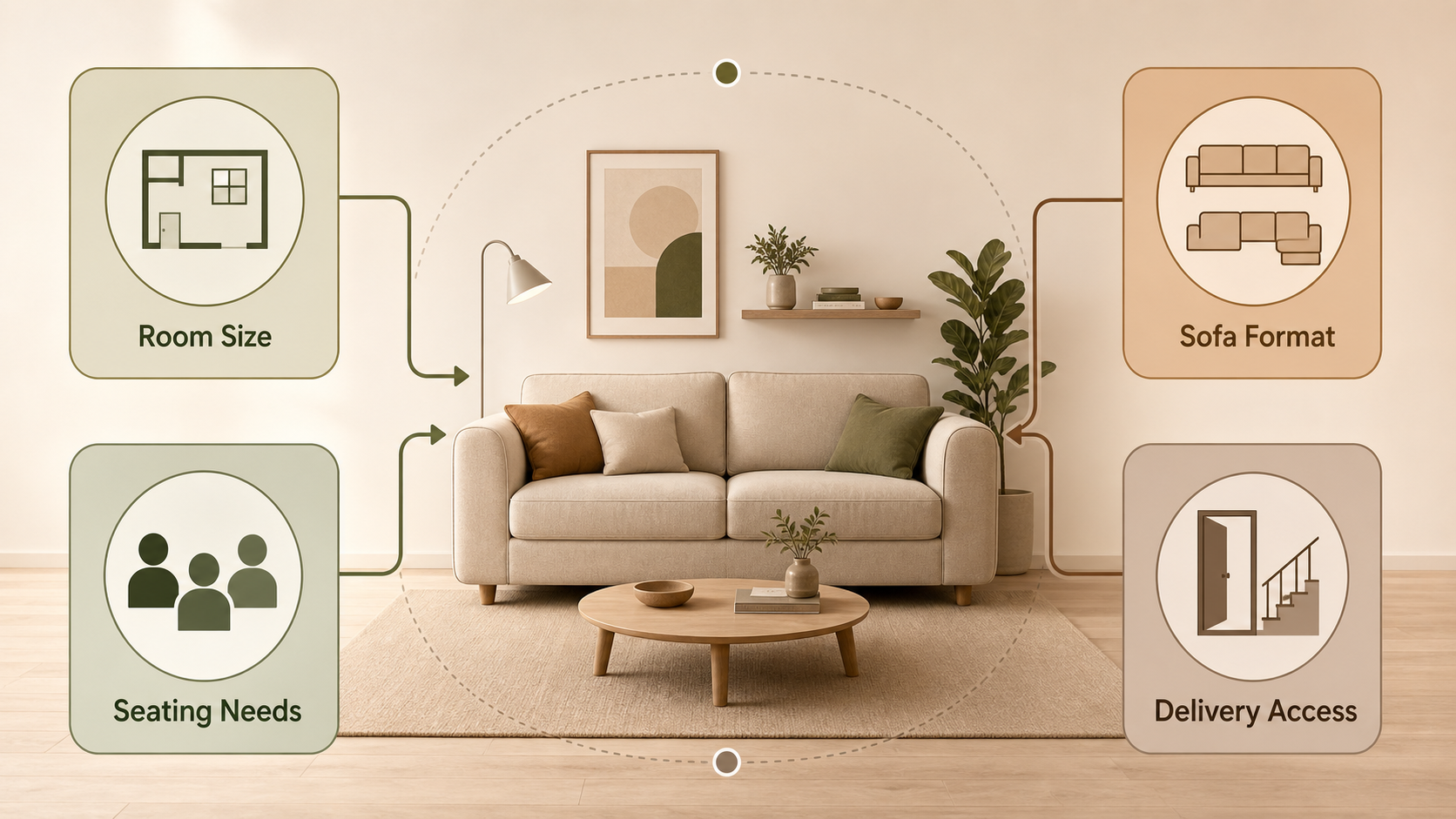 Treat the final choice as a checklist, not a quick browse. First, measure the intended footprint and the route into the room, including doors, stairs, turns and lifts. Then decide what the sofa must do: everyday lounging, upright entertaining, occasional guest sleeping, regular overnight use, or flexible family seating.
Next, compare the exact configuration. A modular arrangement can be helpful, but only if its sections, orientation and overall dimensions make sense in your layout. Check whether a chaise or corner section affects walkways, windows, radiators or other furniture.
Comfort and upholstery should be assessed in context. If possible, sit on the model you are considering; if not, study its dimensions and product information alongside your seating preferences. Consider who will use it, how often, and whether the fabric is appropriate for the level of wear you expect.
Finally, add up the practical costs and constraints: delivery, assembly, access, any relevant finance terms and the policies that apply to the specific order. Use the same checklist for one or two alternatives so you are comparing like with like.
Before you order, use a sofa-size checklist to confirm the model, configuration and access route.
Frequently Asked Questions
Are IKEA sofas good value in the UK?
They can be good value when the exact model fits your room, comfort expectations and total budget. IKEA’s broad UK range and planning options make it easy to compare formats, but value should include delivery, assembly, fabric suitability and how well the sofa serves your intended use. Compare the chosen configuration with similarly priced alternatives rather than judging the whole range by one entry price.
Which IKEA sofa format is best for a small living room?
There is no universal best format. Begin with the room’s measurements, door and walkway clearance, then decide whether a compact fixed sofa, a smaller configuration or a sofa bed solves the real problem. A sofa bed may be useful in a multi-purpose room, while a simpler sofa may preserve more day-to-day floor space. Measure first and assess the exact dimensions.
Should I try an IKEA sofa in store before buying?
Yes, if you can. Independent buying guidance identifies comfort and the role of the sofa as central considerations, and those are difficult to judge from images alone. Sitting on the specific model can help you assess the seat depth, support and overall feel. Still check the product details and order policies for the configuration you intend to buy.
Are IKEA sofa beds suitable for regular guests?
Suitability depends on the individual sofa bed and how often it will be used. IKEA offers sofa-bed formats and planners, but regular guest use calls for closer scrutiny of the sleeping arrangement as well as daytime seating comfort. Compare the exact model’s dimensions, mechanism, access needs and intended use with dedicated sofa-bed alternatives before deciding.
Sources
Related reading
- Best sofas for UK homes: evidence-led top choices
- IKEA vs John Lewis sofas: which is the better fit
- John Lewis sofas review: who they suit and who should skip them
- How a sofa should fit, feel, and perform in a real home
Editorial information: About our editorial team · Read our editorial policy · Read our affiliate disclosure.