A sofa earns its place through daily use: how easily people can sit, stretch out, host friends, clean up after a busy week and move around the room. Start with the home rather than the showroom. The best-looking option is rarely a good buy if it overwhelms the room, feels awkward after ten minutes, or asks for more upkeep than the household can realistically give.
How a Sofa Should Fit, Feel, and Perform at Home
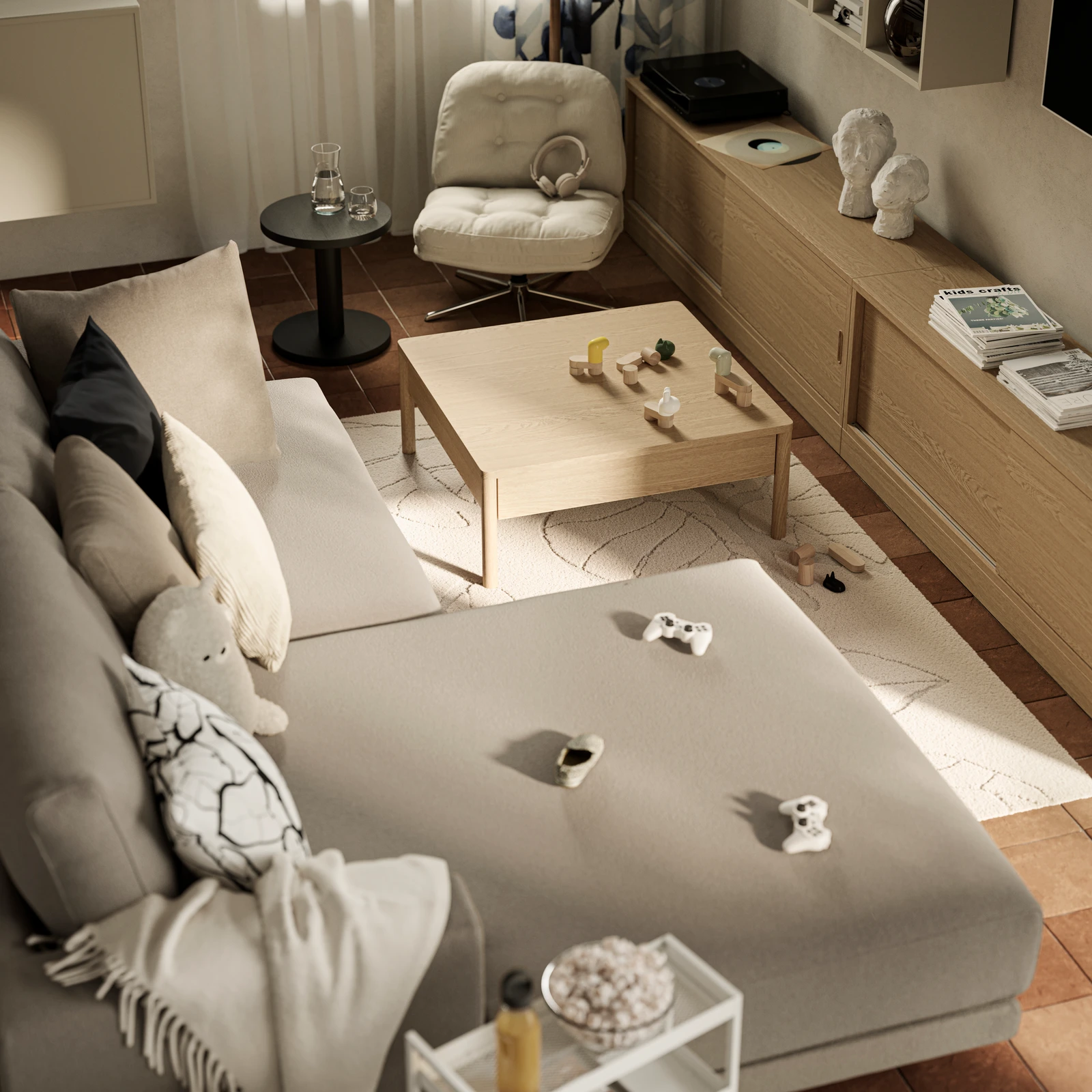 A sofa is a room-scale decision, not simply a colour or trend choice. It needs to work with the proportions of the living area, the route into the property and the habits of the people who will use it. IKEA’s current sofa range illustrates the breadth of layouts buyers may be choosing between, from two- and three-seaters to chaise, corner and modular sofas. Each can solve a different layout problem, but none is automatically right for every home.
Think about performance in five connected areas: overall fit, sitting comfort, upholstery care, the support beneath the cover, and the guarantee terms attached to the particular product. A compact sofa may preserve a clear walkway; a larger corner configuration may suit a room used for gathering. A soft-looking fabric may fit the desired atmosphere, while its care requirements may matter more in a home with children, pets or frequent guests.
Use this guide to rule out unsuitable options before comparing finishes and decorative details. That makes the shortlist more practical and helps ensure the sofa supports the way the room is actually used.
Measure the Room Before Choosing the Sofa
Measure the available space before falling in love with a shape. Record the wall length, room width and the position of doors, radiators, windows, sockets and any furniture that must remain. Then sketch the proposed sofa footprint, including a realistic route around it. The aim is not to fill every empty edge; it is to leave the room usable for the people passing through it.
Check the delivery route with the same care. Measure external gates, hallways, stair turns, lifts and internal doors, then compare those figures with the product’s stated dimensions and delivery information. A sofa that fits its final wall may still be difficult to bring inside. For renters, it is also sensible to consider future moves: a very large corner unit can be harder to place in a different property.
Compare sofa formats against the plan rather than treating their names as size labels. A two-seater may be the better choice where circulation is tight. A three-seater can give more shared seating without the visual mass of a corner model. Chaise, corner and modular sofas can make good use of a larger or more clearly defined seating zone, but they need careful orientation so that the extended section does not obstruct access.
Before ordering, confirm the exact product dimensions, including any protruding arms, loose cushions and the side on which a chaise is configured. Product-specific details should always outweigh a general category description.
Match Seat Dimensions to Posture and Daily Use
Overall width tells you whether a sofa fits the room; it does not tell you how it will feel to sit on. Look separately at usable seat width, seat depth, seat height, arm shape and back support. Two sofas with similar external measurements can offer noticeably different seating positions because their arms or cushions occupy different amounts of space.
Start with ordinary use. Someone who tends to sit upright while reading, working on a laptop or talking may prefer a position that lets their feet rest naturally on the floor and gives their back clear support. Someone who regularly relaxes with their legs tucked up may value more depth. Neither preference is universally better, so avoid treating a single measurement as a comfort guarantee.
If possible, sit on the exact model for long enough to notice how the cushion, back and arm height work together. Try the positions the household uses most: sitting side by side, leaning into a corner, getting up from the seat and using the chaise if there is one. Online shoppers should read the listed seat measurements carefully and use the retailer’s returns, delivery and product information to understand the practical commitment before ordering.
Also consider who will use the sofa most often. A household can prioritise different seating needs without needing every seat to feel identical. The goal is a configuration that suits the main daily pattern rather than an idealised showroom pose.
Choose Upholstery for the Way You Live
Upholstery affects both the first impression and the routine that follows. IKEA’s sofa range includes different material and style choices, including velvet and leather, which is a useful reminder to compare surface character alongside size and shape. The more useful question is not which cover is best in the abstract, but which one fits the household’s tolerance for visible wear, marks and regular care.
Start with exposure. In a busy family room, think about food, drinks, pet hair, outdoor clothing and the number of people using the sofa each day. In a quieter room, appearance and texture may carry more weight. Look at the colour in the home’s normal light, and ask how it will sit alongside flooring, paint and existing textiles rather than under showroom lighting.
Read the product-specific care guidance before buying. Some covers, cushions and finishes may have different cleaning instructions, and removable elements do not automatically make all maintenance simple. Keep the manufacturer’s recommendations available after delivery, especially before using a cleaning product or attempting a stain treatment.
Texture matters as well. A material that feels inviting when briefly touched may feel different after an evening of sitting, and a smooth surface may show creasing, scratches or lint differently from a textured weave. Where samples are available, view and handle them in the context of the room. Choose with realistic upkeep in mind, not just a perfect first-day appearance.
Look Beyond the Cover: Frame, Support and Warranty
The visible cover cannot tell the whole story of how a sofa may perform over time. Ask what the product information says about the frame, internal springs, webbing, feet and cushion construction. These are useful areas to compare because they relate to support and to the parts that may be discussed if a manufacturing fault is reported.
Habitat’s sofa guarantee describes coverage for damage to the frame, internal springs, webbing or feet where it is caused by a manufacturing defect. That example shows why buyers should read the product terms rather than relying on a headline alone: a guarantee can identify particular structural components and still have separate limits for fabric, fillings or certain product types.
IKEA states that its sofas come with a 10-year warranty, while Habitat says many of its sofas and armchairs are covered for 10 years from the purchase date. These statements can be useful comparison prompts, but they are not a substitute for checking the exact model’s coverage, terms and eligibility. Warranty duration does not by itself reveal every included component, remedy or exclusion.
For a long-term purchase, keep the receipt, order details, product page and care information together. They help you compare options before purchase and give you a clearer record if you later need to ask the retailer about a fault or coverage.
Check the Fine Print Before Relying on a Guarantee
A long guarantee is valuable only to the extent that its scope matches the problem you may encounter. Habitat distinguishes its sofa guarantee from additional Furniture Care cover, which it says can protect against spills, rips, tears or burns. This distinction is important: accidental damage protection should not be assumed merely because a sofa has a long frame guarantee.
Habitat’s published terms also say that the standard guarantee is non-transferable, begins from the original purchase date and requires proof of purchase such as a receipt and order number. It notes a two-year guarantee for fabric and 10 years for the frame, and lists exclusions including sofa beds, recliners, selected occasional chairs, Made To Order ranges, seat pads and back-cushion fillings. Conditions can change and vary by product, so use this as a reason to check the current terms for the sofa you are considering.
Before committing, save the relevant product page and read the retailer’s current terms. Check the covered components, exclusions, duration, claims process, repair or replacement approach, and whether optional cover is separate. Keep the paperwork after delivery; it is a practical part of the purchase, not an afterthought.
Use a Practical Sofa Shortlist
Turn research into a shortlist by ranking the non-negotiables first. Start with the maximum dimensions the room and delivery route can accept. Next, decide the seating format that suits the layout: compact straight seating, a longer three-seater, a chaise, a corner arrangement or a modular solution. IKEA’s category range can be a helpful starting vocabulary, but use the actual dimensions of individual models for the final decision.
Then compare comfort and care. Note the seat measurements, back and arm shape, preferred sitting positions, cover material, cleaning guidance and whether the household is likely to cope with the required maintenance. If you can sit on a model, make notes after trying it; if you cannot, be especially methodical about the product information.
Finally, compare the documentation. Read the model-specific guarantee, identify what it covers and excludes, and retain the receipt and order confirmation. Habitat’s terms show why this last step matters: frame, fabric, cushion fillings and additional accidental-damage cover can be treated differently.
A simple shortlist can have five columns: fit, seating feel, upholstery care, support details and guarantee terms. Choose the option that has no major compromise in the first two columns before letting colour, styling extras or a small price difference decide the result.
Frequently Asked Questions
How much space should you leave around a sofa?
There is no single clearance that suits every room. Leave enough room for doors to open, people to pass comfortably and other furniture to function. Mark the proposed footprint on a plan or floor with tape, then test the routes you use every day. Also measure the delivery route separately; a sofa can fit the room but still be difficult to bring through a narrow hall, stair turn or doorway.
How do you know whether a sofa seat will feel comfortable?
Look beyond overall size and compare usable seat width, depth, height, arm shape and back support. Try the positions you normally use, such as sitting upright, leaning back or sharing the sofa. Comfort is personal, so a product’s dimensions and your own sitting test are more reliable than a general rule about deep or shallow seats.
Does a 10-year sofa guarantee cover fabric damage?
Not necessarily. Habitat states that its standard guarantee has different periods for fabric and frame, and that its additional Furniture Care cover can address spills, rips, tears or burns. It also lists exclusions. Check the current terms for the exact product and keep proof of purchase; do not assume a 10-year headline provides complete accidental-damage protection.
What should renters check before buying a large sofa?
Measure the current room and delivery route, then consider whether the sofa could be moved through and placed in a future property. Check access restrictions, stairwells, lifts, door widths and the configuration of a chaise or corner section. Retain the purchase records and review the retailer’s delivery, returns and guarantee terms before ordering.
Sources
Related reading
- Best sofas for UK homes: evidence-led top choices
- IKEA sofas review: strengths, limits, and alternatives
- How to choose a sofa for your room and daily life
- When to buy furniture for better value
Editorial information: About our editorial team · Read our editorial policy · Read our affiliate disclosure.